What If Pain Isn’t the Enemy—but Information?
Feb 10, 2026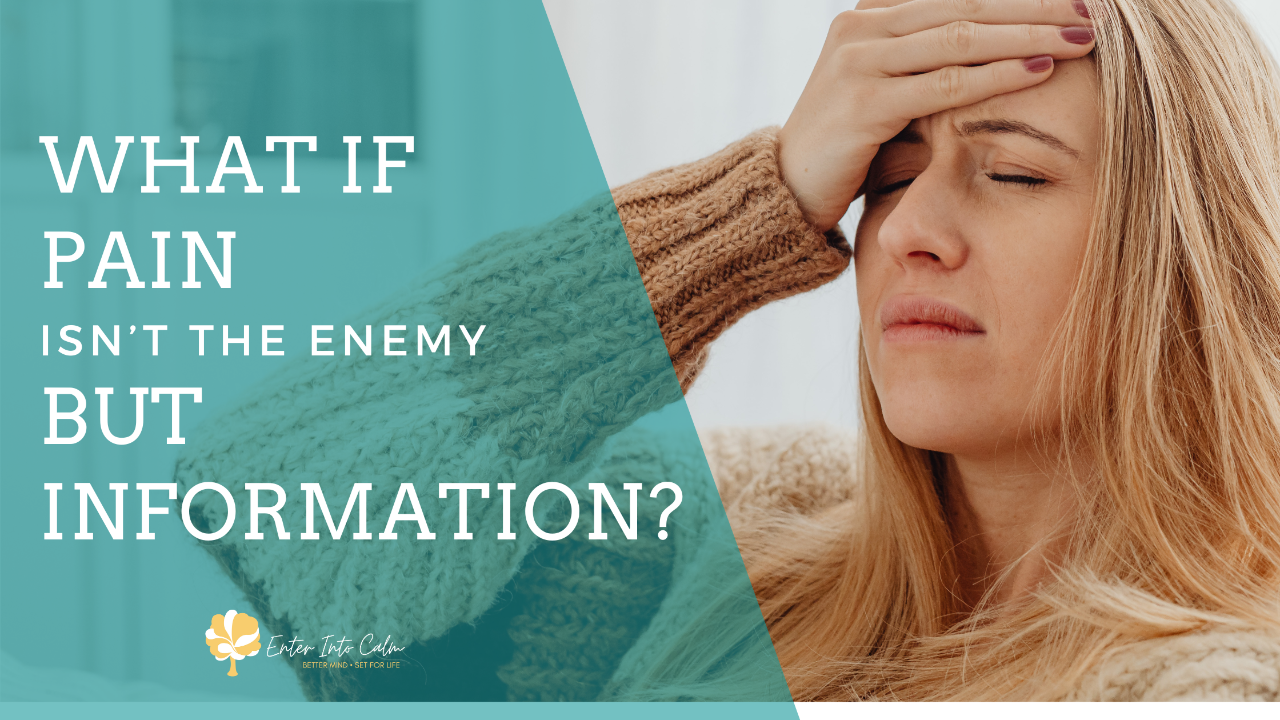
Pain is often treated as something to eliminate, suppress, or control.
But what if pain is not the problem—what if it is information?
Emerging research in the mind-body connection shows that pain is not just a physical signal, but an experience shaped by the brain, attention, and the nervous system. Understanding this changes everything—not by dismissing pain, but by changing how we relate to it.
Pain as Predictive Processing
The brain continuously integrates sensory input with prior experience, emotional context, and learned expectations to decide whether the body is in danger—a process strongly influenced by attention and interpretation.

Over time, this process can become self-reinforcing. Fear amplifies pain. Pain reinforces fear. The nervous system becomes sensitized—what many people describe as feeling “on high alert.” Attempts to push through or override pain often worsen symptoms, not because tissues are failing, but because the system is responding to perceived threat (Fitzcharles et al., 2021).
Why Reframing Pain Changes Outcomes
When pain is understood as modifiable brain activity, something else becomes possible: agency—the ability to respond differently rather than trying to control every sensation.
When pain is understood as modifiable brain activity, something else becomes possible: shifting from control to agency.
Pain Reprocessing Therapy (PRT) provides compelling evidence for this shift. In a randomized clinical trial, two-thirds of participants with chronic back pain were pain-free or nearly pain-free after treatment, with effects sustained at one year (Ashar et al., 2021). Improvements were mediated not by distraction or coping, but by reattribution—changing beliefs about pain from structural damage to mind–brain processes (Ashar et al., 2023).
Patients described learning to relate to pain as information rather than danger. Fear reduction—not force—was the central mechanism.
Where Hypnotherapy Fits
This is where hypnotherapy becomes especially relevant.

Clinical hypnosis works directly with predictive processes—attention, expectation, imagery, and meaning—to recalibrate threat appraisal at the level where pain is generated. This is why hypnosis can create measurable shifts in experience.
In practice, hypnosis helps people discover that sensation can shift without injury, that attention alters perception, and that the nervous system can learn new patterns. This experiential learning is often what allows cognitive reframing to truly take hold.
For nurses and clinicians, hypnotherapy offers a language-based, relational tool that aligns with neuroscience while fully validating the lived experience of pain.
Moving Forward
Experience the shift for yourself
Understanding pain differently is powerful—but real change happens when your nervous system experiences something new.
At Calm Collective Care, we’re committed to making evidence-informed, nervous-system–based approaches accessible in ways that fit real lives. Through secure Zoom sessions, you can engage in clinically grounded hypnotherapy from the comfort of your home—without sacrificing depth, safety, or connection.
Our work is rooted in the same principles explored here: restoring agency, reducing fear, and helping the nervous system learn new patterns of response. Whether you’re navigating chronic pain, stress, anxiety, or a desire for greater clarity and resilience, our collective approach blends hypnotherapy with coaching and mindfulness-based practices to support meaningful, sustainable change.
Ways to Get Started
Guided Group Hypnosis
We offer live, guided group hypnosis sessions designed to support stress reduction, confidence, emotional regulation, and nervous system resilience. These sessions provide a structured, supportive environment for experiential learning—whether you join live or explore our growing audio library.
👉 Learn more Group Session in the Change Your Life Circle
👉 Access the ever-expanding Audio Library
One-on-One Hypnotherapy
For a more personalized approach, working individually with a certified hypnotherapist allows for tailored support aligned with your specific goals, history, and nervous system patterns. You can explore our team of practitioners and schedule a consultation to find the right fit.
Guest Author Spotlight:
Christy Cowgill CRNA, PMHNP-C, NC-BC, BCH, CI
Christy board-certified hypnotherapist and certified instructor of hypnosis. Her clinical practice integrates her backgrounds in psychiatric mental health and anesthesiology, with a focus on supporting clients experiencing depression, anxiety, and chronic pain. Committed to advancing trauma-informed hypnosis education for nurses, Christy advocates for clinically grounded hypnosis training pathways and is a founding member of Calm Collective Care.
References:
-
Ashar YK, Gordon A, Schubiner H, et al. Effect of Pain Reprocessing Therapy vs Placebo and Usual Care for Patients With Chronic Back Pain: A Randomized Clinical Trial. JAMA Psychiatry. 2022;79(1):13–23. doi:10.1001/jamapsychiatry.2021.2669
-
Fitzcharles, M. A., Cohen, S. P., Clauw, D. J., Littlejohn, G., Usui, C., & Häuser, W. (2021). Nociplastic pain: towards an understanding of prevalent pain conditions. Lancet (London, England), 397(10289), 2098–2110. https://doi.org/10.1016/S0140-6736(21)00392-5
-
Ashar YK, Lumley MA, Perlis RH, Liston C, Gunning FM, Wager TD. Reattribution to Mind-Brain Processes and Recovery From Chronic Back Pain: A Secondary Analysis of a Randomized Clinical Trial. JAMA Netw Open. 2023;6(9):e2333846. doi:10.1001/jamanetworkopen.2023.33846
A Different Therapeutic Stance
Pain isn’t a life sentence—it’s information.
Be Calm ...
and experience hypnosis!
Hypnosis can help in many ways. Curious Minds should Stay Curious.
Boost Self-confidence • Lessen Anxiety • Grief• Cancer • Create Positive Mindset • Eliminate Limiting Beliefs • Improve Sleep • Manage Pain Better • Prepare for Childbirth • Enhance Performance • Heal & Resolve Grief • Change Habits • Weight Loss without Dieting • Smoking Cessation • Stress Reduction • Stop Teeth Grinding • & more
Connecting with me 1:1 is fast and easy!
